I'm following the steps of SGD, but unsure if I am interpreting the steps correctly.
Let's say there are two w terms:
where x is tensors and w are two logistic function params.
and the goal is to find argmin(lambda)
And SGD formula is given as:
This is the code I have so far, with library constraints:
import numpy as np
import torch

some_data = torch.rand(1000, 2)
x = some_data[:,0]
y = (x + 0.4 * some_data[:,1] > 0.5).to(torch.int) # doesn't work with bool?

x = torch.split(x, 3) # batch
y = torch.split(y, 3)

# optim problem
w1 = torch.autograd.Variable(torch.tensor([0.1]), requires_grad=True)
w2 = torch.autograd.Variable(torch.tensor([0.1]), requires_grad=True)

lambda_min = torch.zeros(1)

for epoch in range(10):
  #print(f'epoch: ', epoch)
  for xx, yy in zip(x, y):

    p_x = 1 / (1 + torch.exp(-w1 - (torch.mul(w2, x))))

    # NLL
    lambda = torch.sum(yy * torch.log(p_x) + (1 + yy) * torch.log(1 - p_x))

    # Gradient???
    if lambda < lambda_min :
      lambda_min = lambda # Q: loss value, right?
      # Q: update params...?
      w2 = w1 - torch.mul(0.01, lambda_min)
      print(f'w2 = ', w2)
    else:
      pass
I would like to confirm the parts with "Q:"
Then how would I plot this with y and x to look like a regular logistic function with tensors, similar to below, but with all the 1s and 0s in the graph?
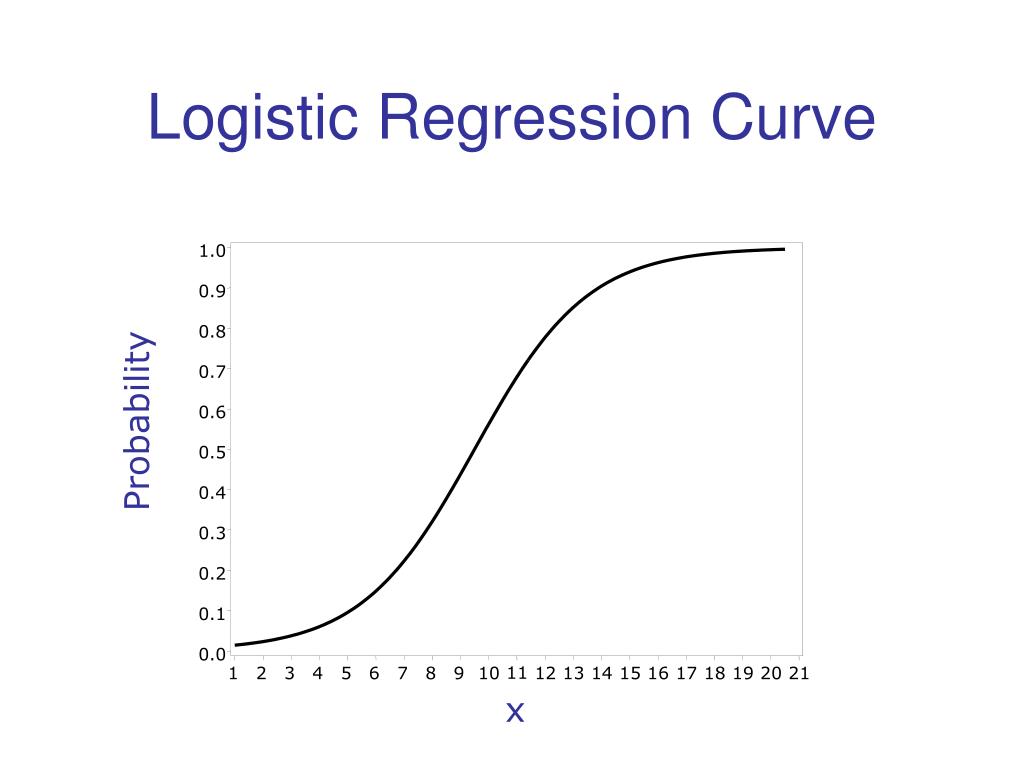

There are multiple issues with this code.
lambda < lambda_min. BTW,lambdais a keyword and can't be used as a variable name.w2 = w1 - torch.mul(0.01, lambda_min)is not a gradient descent step:w2equal to oldw2plus some adjustment. You code sets it equal tow1(!) plus some adjustment.(1 + yy) * torch.log(1 - p_x)should be(1 - yy) * torch.log(1 - p_x)(note the "1minusyy" part).